Showing posts with label malta. Show all posts

2008-02-18

Cyprus and Malta: balance those verses

Okay. Cyprus is not going to win this competition.


Here's why. You don't win the Eurovision with a song that varies significantly in tempo and has very different sections. It doesn't matter if it's otherwise a good song - look at Israel crashing and burning last year. You simply can't win with a song with very different meter sections.

I could make tedious lists of winners to try to prove that point but for the sake of brevity just look at the most popular song contest entries of all time: the one exception to the "steady tempo" rule is "Volare", which (besides obviously not winning) is from an era before the format settled and before the 3-minute rule, allowing Domenico to build it up properly.

The question is obviously why this trend continues rather than establishing its existence. Part of it is obviously the drop in energy but there's another aspect to it, at least in this entry: the overburdened verses. The verses are simply too long and the chorus too weak to work, and the expected punch-dip-punch of a normal pop song never happens. And that means it never gels together as a proper Eurovision song.

I'll explain what I mean. When it comes to Eurovision, The Manual pretty much had it nailed: start by establishing your hook, then sneak in any old rubbish as a verse, before jabbing your hook in again and again. Cynical? Look at all those "Congratulations" entries - the vast majority use the "hook, verse, chorus with hook" approach as their starting point. Some start with a chorus but the best ones are slightly more subtle, suggesting the hook with an instrument, or part of it or a variation of it, or even just the rhytm of the vocals or the harmonic progression and beat. I think Malta does it very well this year:


"Vodka" is my pick of the bunch to win it so far and it conforms perfectly with the rules - it establishes a hook/progression that runs under the chorus and comes back again at perfectly timed intervals. I've not seen anyone tip this but I'd be surprised if it didn't finish quite high in the rankings.

One interesting thing about verse balances is that while you can have too heavy verses like "Femme Fatal" does, where the chorus essentially is just a variant of the verse, you can also go too heavy on the chorus. In the Swedish pre-selection semifinals this weekend the media tipped huge stars Carola and Andreas Johnson to win it comfortably, yet they only finished third... With a song that's basically an extended chorus with some bare slivers of verse and a couple of bridges joining it together.

It seems if you're going to compete in the Eurovision you've got to understand the format.

2008-01-20

Two Malta CDs

Well, I've had a listen to the material I brought with me from the Med and I have to say the stuff is fairly underwhelming. I had two priorities when shopping on the island, buying some local hip-hop and checking out the local genre ghana, and I guess both of those are fulfilled. Still, I was hoping for more from the descriptions I've read that instilled me with a sense of false hope.


On friday I bought the hip-hop CD, in what seems to be the only independent record store on the island. Hooligan is Malta's best-established rapper (probably a bad sign, in hindsight) and puts out fairly tepid hip-hop with dull beats (but fun titles, that's what drew me in I guess). As you might guess the hip-hop scene on Malta is not exactly huge. Two decent picks from a bad bunch below, one with an interesting use of strings and the other one veering towards hip house.


Now Ghana (pronounced aa-na, and like most folk music genres meaning "song") is a different matter entirely. Because it's actually fairly interesting, it's just that the descriptions offered veer quite a distance from the truth. I guess the romatic notion that the arabs would have left a still-existing musical tradition behind when they left over a milennium ago is fairly ridiculous when you think about it, but it's very frequently repeated, even in the supposedly scholarly article above.

I bought two CDs from a pirate stall at the big Valetta sunday market. Piracy is very frequent in Malta as the copyright laws were only recently instated and are very badly enforced. One of the CDs I bought at the behest of the stallkeeper, and one because I saw an old man buying the same one before me; that way I felt insured against both old men with bad taste and tourist traps.


Turns out the stallkeeper's CD was miles better (the other one was rather poppy). Here are the supposedly two initial tracks on the CD, but to my ears they blend into just one, 30 minutes long.


There's no doubt in my mind that this material is fairly deeply entrenched in the European tradition. The guitar and the melodic base are obviously tonal, complete with some sort of cadences that are apparent even in the song. Substract all the idiosyncratic preformance elements and it's not terribly distant from Neapolitan song or something else fairly classical in nature.

The length, the singing style and the wavering tonality in the voice are also plentifully represented in other ur-european traditions - serbian guslari for instance contains similar heterophonic arrangements, microtonality and wavering rhythm. Come to think of it, ghana may actually be fairly exceptional in southern european music because it's so Non-arabic in nature - Portugese, Spanish and Greek folk music all contain a much stronger eastern influence!

So while the Arabic invasion is felt in the architecture, language and probably in the culture, it's not present in the music as much. It's such an appealing idea that it might be there, but alas it's not. Of course, "arabic" has come to mean something else according to the research paper above - the pre-modern, what is not recognisably a modern invention. I guess that's why the myth persists.

2008-01-18

Malta Travel Report

What an interesting, beautiful, compact country!

I've had a great week in Malta with some excellent sightseeing, agreeable weather, interesting walks in historic environments and literally hundreds of pictures of cats (my fiancée asked me to take them). Malta is a dream holiday destination but its culture is equally fascinating, stuck between the east and west, between the past and the present.

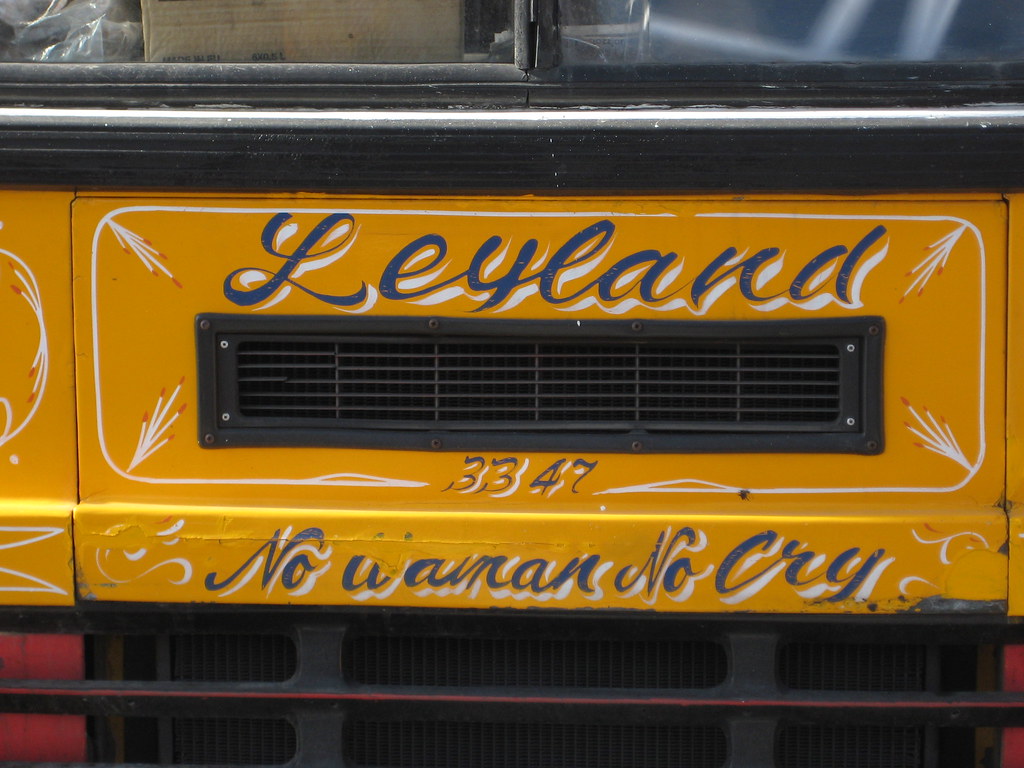
Close out the modernity for a moment and you could almost be in some far-off tropical land, with gaudily painted old 50s buses, tailors sitting behind unmarked wizened doors and a strange semitic language full of harsh sounds and glottal stops. Yet it's also recognisably modern and western with all the trappings of our culture, like handicap parking spaces, a powerful environmental lobby, and skate parks.


The mixed heritage of a succession of different reigning powers has left an indelible mark on Malta, not least in the housing which happily mixes Arabic flat-roofed buildings, Spanish balconies and British terraced rows. That creolisation mixed with some other curious aspects of maltese culture (like the extreme and very public Catholicism) makes it a potential goldmine for any social or cultural scientist.

That goes for the muisic too, to some extent. Ghana, the traditional working-class music that's Malta's equivalent to greek Rebetika or portugese Fado, is a fascinating mixture of Neapolitan or Sicilan song and strange foreign-sounding microtonality. An island of its diminuitive size (roughly a third of the size of Stockholm, both geographically and population-wise) is never going to be a hotbed of cultural diversity, but it's remarkable how many unique things they've pressed out.

My mother (who is Hungarian, another frequently occupied nation) offers up the theory that an opressed culture holds on very tightly to its own visible (or audible!) expressions and will try to retain as many as possible in the face of a dominant ruler. That would also help explain why nothing very much new seems to be appearing on the music scene except for fairly dull western rip-offs and a bit of house - they're holding on to traditions and don't have room for any more.


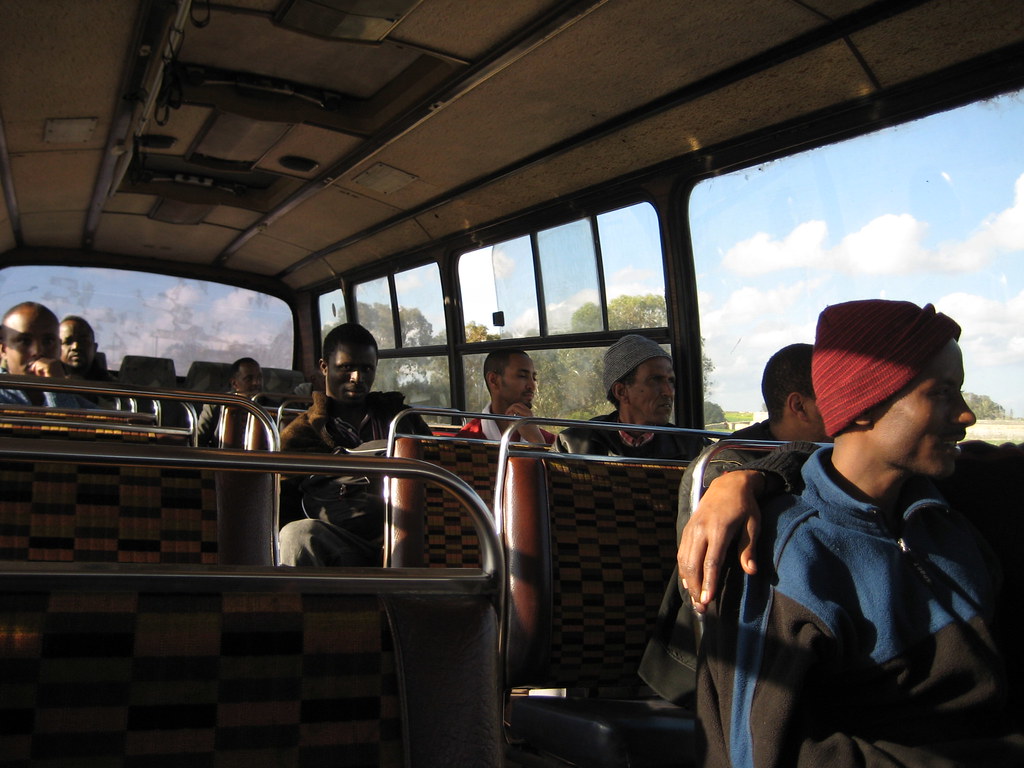
I'm hoping another invasive group will give the music scene the boost it needs to get started. Malta, as Europe's southern outpost, recieves thousands of African refugees that travel in small boats, paretas, hoping to make it to shore. These predominantly young men are recieved with some hostility by the homogenous Maltese society and mostly (for now) live in the refugee camps of Marsa and Hal Far. The camps are free to access and free to leave and many take illegal unskilled jobs to supplement their meagre government allowance.

I visited both camps (by mistake, call me the accidental social tourist) and there was plenty of music playing all round in the little camp bars. Since Africans (from all over west and north africa, we met Ghanaians, Togolese people, Moroccans...) are increasingly becoing very prevalent in the society, that music is likely to spread. Malta has a no deportations policy and it's likely we'll see plenty of interesting mix culture coming along in a generation's time. There's definately hope.


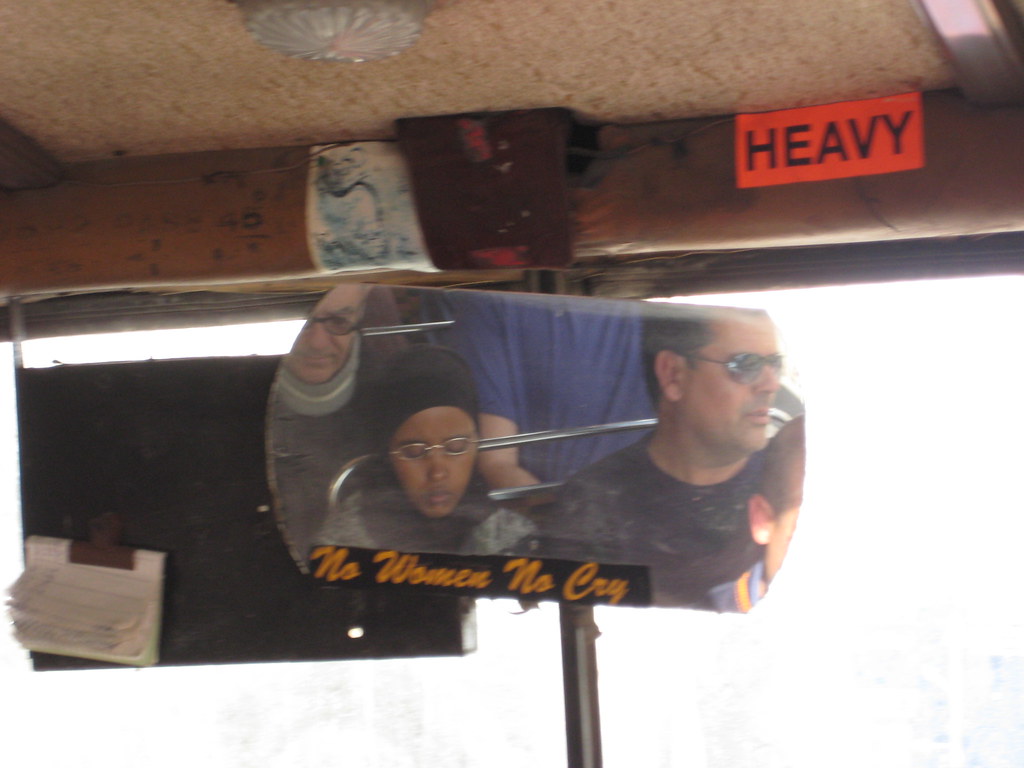
I bought some CDs while on Malta that I will be posting assessments of in my next post. Meanwhile, here's some more photos from the journey.